

Short version: Door hangers, events and referrals are cheap, but they are easy to waste because nobody tracks them. Tag each one with its own code or number, log it by street, event or referrer, and count appointments, not handshakes.
Plain definitions
- Canvassing: going door to door, either to talk to homeowners or to leave something behind, like a door hanger.
- Referral: a new customer who came because an existing customer or partner recommended you.
- Converted lead: a lead that turned into an appointment. Cost per appointment is your spend, including staff time, divided by appointments. Cost per closed job is a separate metric based on jobs that actually closed.
These channels do not have a dashboard, so they get judged on feelings. “The event felt busy.” “A few people mentioned the hangers.” Feelings do not tell you where to put next month’s budget. Tags do.
Door hangers work best close to a job you just did
A door hanger on a stranger’s house is easy to ignore. A door hanger that says you just finished a job a few doors down is not. It is local, specific and believable, and the neighbor can see the work.
To make them measurable:
- Put a unique phone number or QR code on each batch, such as one per neighborhood or per job.
- Add a short offer code people can say on the phone.
- Keep a log with the date, the streets covered, the number of hangers and who handed them out.
- Count appointments against that log, not against the whole month.
Know the rules before you knock
Many cities and towns require a permit for door-to-door solicitation, and some limit the hours. Check your local rules before you send anyone out, and respect “no soliciting” signs.
If your team sells at the door, the FTC’s Cooling-Off Rule applies to many at-home sales over $25. In general, sellers must tell the customer they can cancel within three business days. State rules can add more. This is not legal advice, so have your attorney review your door-to-door process.
Events: pick the crowd, then capture every name
A booth at a home show or a sponsorship of a youth league can be worth it, or can be an expensive way to hand out pens. The difference is whether you know what came out of it.
- Choose events where homeowners are. Home shows and neighborhood festivals beat general crowds.
- Give each event its own code. A QR code and a dedicated phone number on the signage and handouts.
- Capture contact details on the spot. A short form or a badge scan, with a clear reason to share, like a free estimate.
- Follow up within the week. A call or text from a real person, while they still remember you.
- Count the full cost. Booth fee, supplies, giveaways and staff time, divided by appointments.
Referrals: borrowed trust
A referral skips the hardest part of selling, which is getting a stranger to trust you. A friend vouches for you, and the new customer borrows that trust. It works the way a mixtape did in the 90s: someone you trust hands it over and says you will like it.
One research study backs this up, with a caveat. Schmitt, Skiera and Van den Bulte followed almost 10,000 accounts at a German bank over 33 months. They found referred customers churned about 18% more slowly, and their customer lifetime value over six years was about 16% higher. It was one bank in one industry, so it may not carry over to home services. It does suggest that a referred customer is worth tracking separately.
A simple referral program:
- Ask at the right moment. Right after a job goes well, and right when you ask for a review.
- Make it easy. A short link or card the customer can pass on in a few seconds.
- Thank people. A reward is fine, but a prompt, sincere thank-you matters just as much. Pay the reward after the job closes, not at the appointment.
- Record who referred whom. Add a “referred by” field in your CRM and fill it in every time.
Partners count too. Realtors, property managers and other trades can send you work. Track each partner the way you track a customer.
How to measure all three
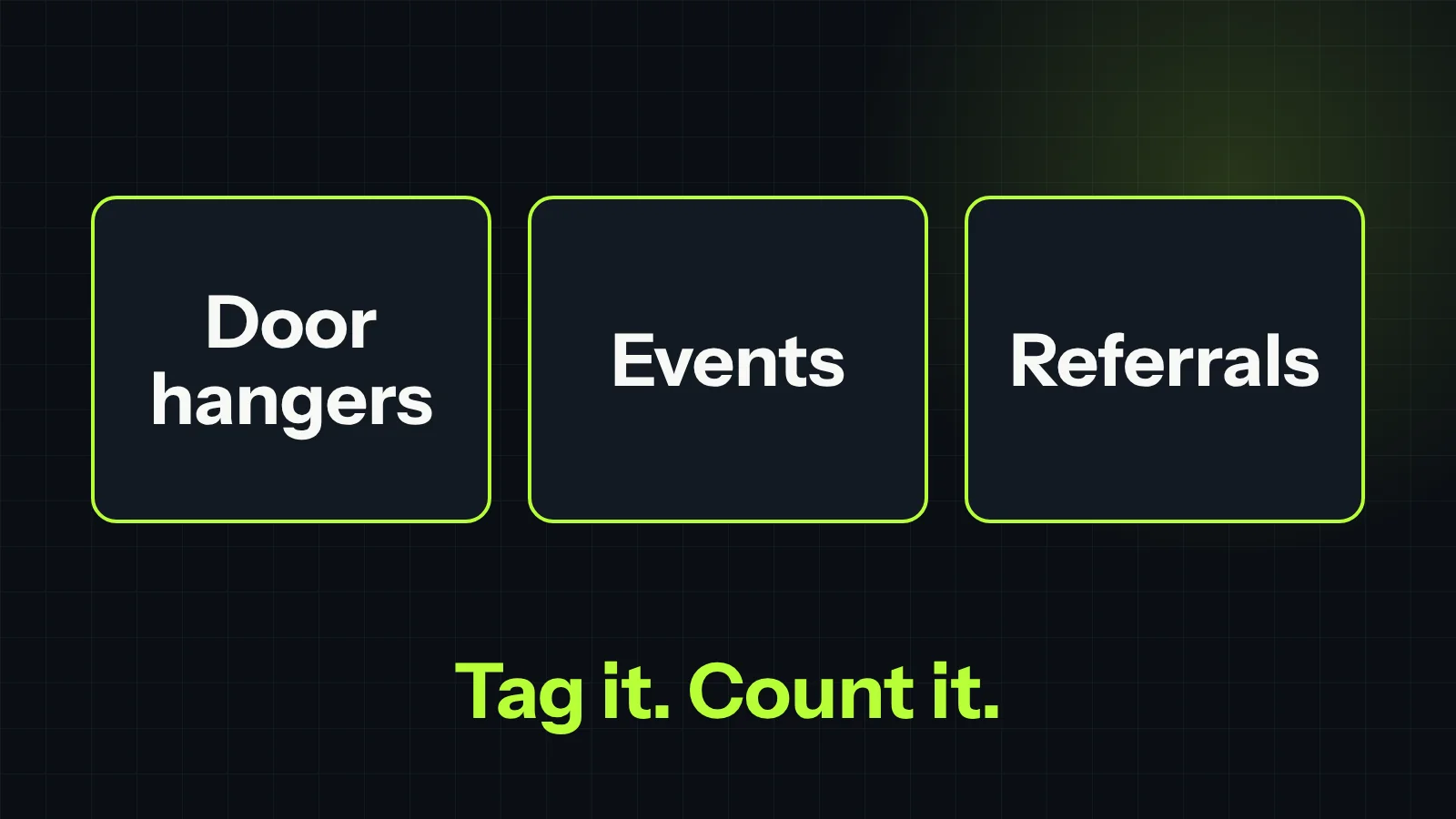
| Channel | How to tag it | What to count |
|---|---|---|
| Door hangers | Unique number or QR code per batch | Calls, appointments and closed jobs per batch, against hangers delivered |
| Events | Event code and dedicated number | Contacts captured, appointments, and cost per appointment including staff time |
| Referrals | “Referred by” field in the CRM | Appointments, closed jobs and repeat business by referrer |
Review the table every month. Keep what beats your target cost per appointment. Fix or drop what does not.

Field note
One habit I push with sales teams is clover leafing: knocking on the doors around a home you just visited for a sales appointment. It can be very effective. In roofing, the salesperson can easily spot nearby homes with an aging roof. In other trades, I find the neighbors’ homes are usually about the same age as the one you just left, so they may have the same problems. Electrical code issues and musty basements are common examples. I’d make it a habit for your sales team to clover leaf after every run appointment, and always respect “no soliciting” signs.
What we would check first in your account
- Whether door hangers, events and referrals each have their own tag today.
- Whether the CRM has a “referred by” field and whether people actually fill it in.
- Whether you have a list of past customers who have never been asked for a referral.
- Whether your door-to-door process has been checked against local permit rules and the Cooling-Off Rule.
- What each channel cost per appointment last quarter, with staff time included.
Related work: door hangers and canvassing, events and sponsorships and referral programs.


